Winlink Wednesday

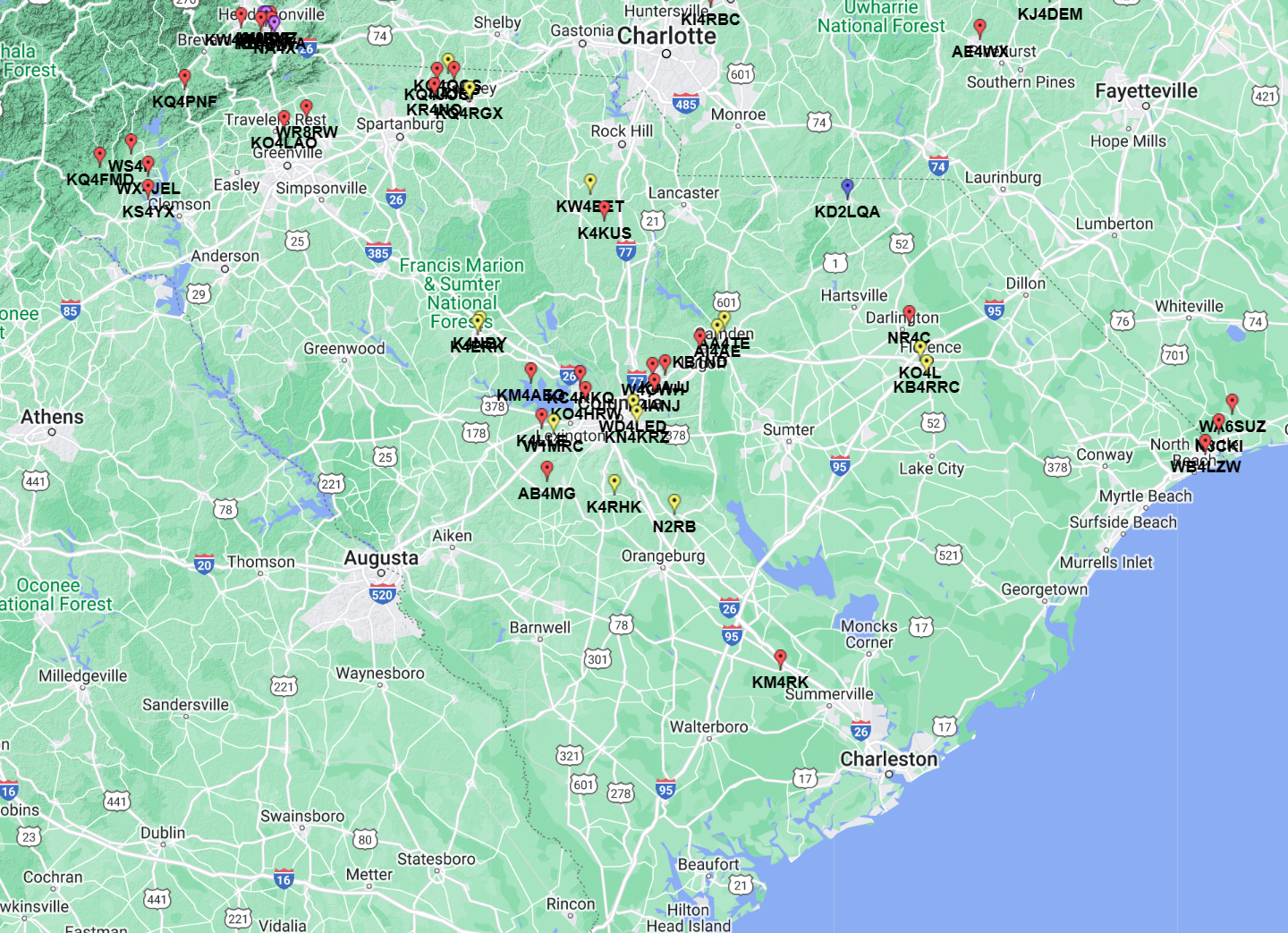
As you know Winlink is a very important tool in the volunteer emergency communicator toolbox.  We want to get South Carolina on the map.  The challenge is to send a Winlink message as explained here, every Wednesday before midnight. And we can get South Carolina on the map. This training task is coordinated by Mark … Read more

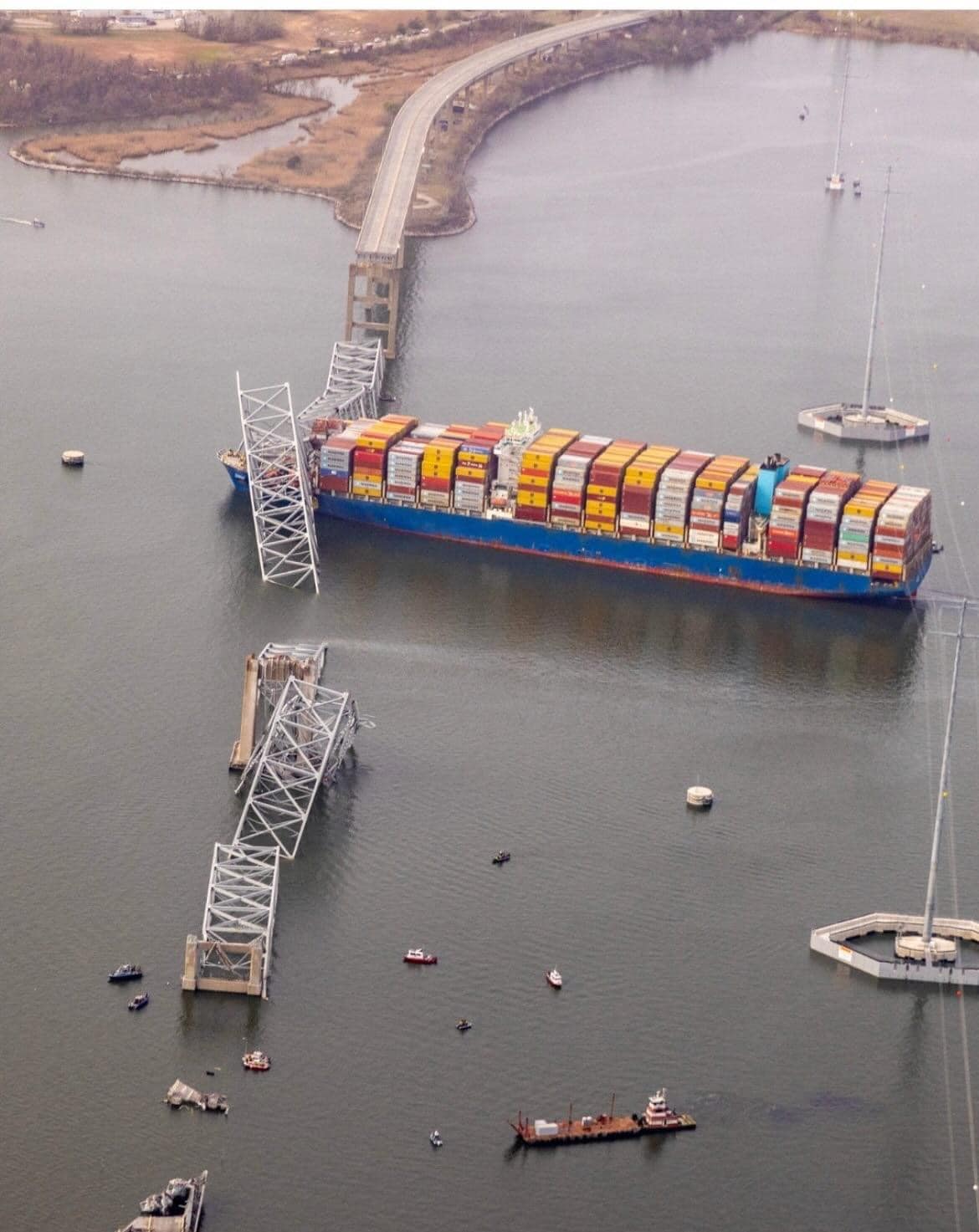
This is the Baltimore City fire department radio traffic of Key bridge collapse

https://youtu.be/g3lz-oBnmYE?si=hMaqwwcq6shaA9p6     This is the first time I have heard first responder traffic during a significant event. This group always remained calm and professional. It would be awesome if the SC amateur volunteer community (ARES and AUXC ) could train to this level of communications. This is also the first time I have heard … Read more

What is required to join ARES ?

The Amateur Radio Emergency Services team is always looking for new members. People excited about providing communications in an emergency situation.  So how do you join ARES and what is the difference between level 1 and level 2? ARES level 1 is the entry level, join the team come on in and look around. Talk … Read more

Difference between ARES, RACES and Auxcomm, in South Carolina

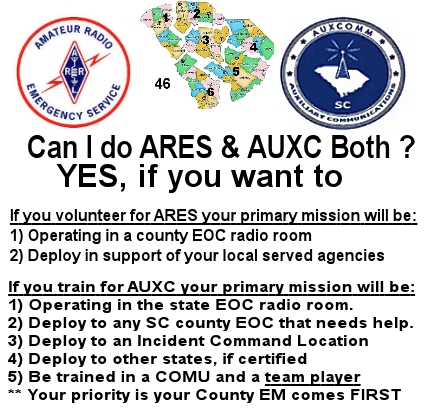
ARES: FCC Licensed Amateur Radio Operators who have voluntarily registered their qualifications and equipment, with the local ARES leadership, for communications duty in the public service when disaster strikes. ARRL/ARES provides basic training curriculum and exercise opportunities. The list of agencies a volunteer might end up serving is long but could include a County EOC/CERT, Hospital … Read more

Get Ready Volunteer Checklist

If you don’t have a checklist to help you when it comes time to deploy then this is a good stating point.  Download it, print it and add whatever you need. Get Ready Volunteer Checklist

WORKING WITH PUBLIC SAFETY OFFICIALS, SCHEART training net topic.

On the 6/8 SCHEART training net Kent Hufford, KQ4KK presented this topic, which was originally written by Christine Smith, N5CAS (sk). It is a long read but it answers so many questions.

WORKING WITH PUBLIC SAFETY OFFICIALS
Modified from a Waller County, TX ARES training article
written by Christine Smith, N5CAS (sk)

Meeting the communications needs of “served” agencies is quite a challenge in today’s complex
disaster/emergency relief arena. The number of emergency relief organizations and their increasingly
sophisticated needs all competing for that scarce resource–the volunteer. The activity of other non-
amateur volunteers makes the picture even more complicated. As more of the population moves to
disaster-prone areas and less government funding is available, more pressure is placed on agencies
to use and sometimes abuse the volunteer sector for support of their missions in disasters. Toes are
sometimes stepped on and a volunteer’s morale can be undermined.
On the other hand, the ARRL, SCHEART and SC EMD formal relationships with served agencies are
vitally important and valuable to radio amateurs. They provide us with the opportunity to contribute in
a meaningful way. Another substantial benefit not to be overlooked is that these relationships lend
legitimacy and credibility for Amateur Radio’s public service capability.
What to Do?

Read more