AUXCOMM USA WINLINK P2P PARTY – BEGINNING 13 May at 00.00 UTC

The AuxComm USA Winlink P2P Party will begin Tuesday 13 May at UTC 00:00 . This event will operate on frequency 14.119 (USB), using VARA HF.  This is a 24 hours exercise.

Tuesday’s exercise is a reschedule of the event that was cancelled on Tuesday 6 May due to poor propagation conditions.

The final destination station, WX0NET, will be on its North-South Antenna for the first 12 hours, and its East-West antenna for the last 12 hours.

As of now there are two confirmed relay stations:
One in Colorado, callsign N0OM
A second in Washington State, callsign KJ7SJG

Additional relay stations are still needed.  If you want to volunteer as a relay station, send an email to Admin@AuxCommUSA.org with your name, location, and callsign. You will be added to the list on the AuxComm USA (Public) Facebook page.

Try to connect when it’s most convenient for you. Some congestion is expected, so be patient. Remember messages are intended to be Winlink point-to-point.  Telnet messages and messages sent via RMS Gateways will not be counted.
Winlink Wednesday

As you know Winlink is a very important tool in the volunteer emergency communicator toolbox.  We want to get South Carolina on the map.  The challenge is to send a Winlink message as explained here, every Wednesday before midnight. And we can get South Carolina on the map. This training task is coordinated by Mark Goddard,  KN4KRZ,   goddard.mw@gmail.com

How? Send a Winlink message to KN4LQN as formatted below. Send the message in any mode including Telnet, VARA FM, VARA HF, or any others.
 
To: KN4LQN 
Subject: Winlink Wednesday Check-In 
Message body: call sign, first name, city or town, county, state (HF or VHF, etc.) 
 
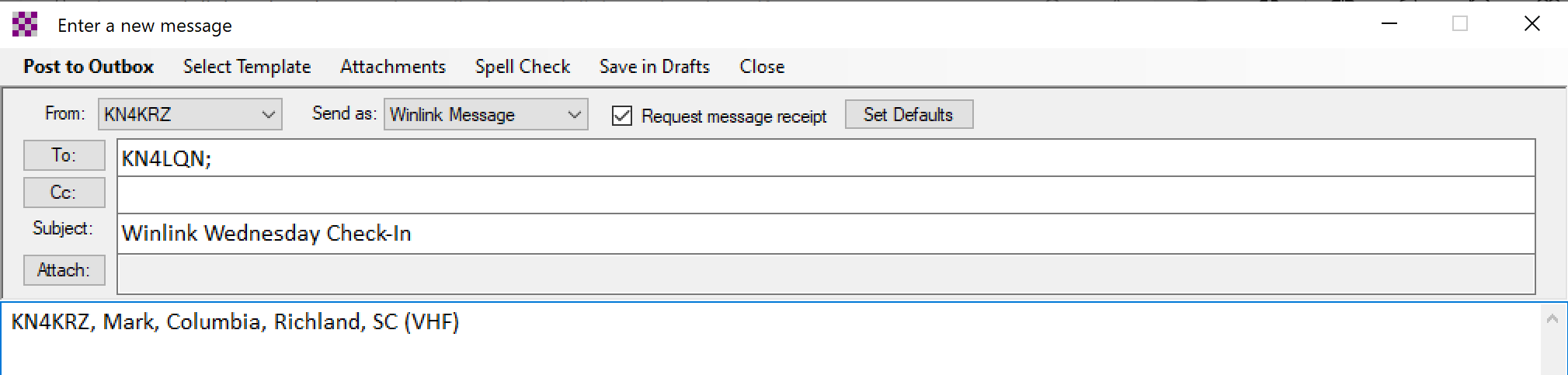
Your message will look something like mine below. Except, of course, with your information in the message:
 
Then, check back on Thursday, May 17 to see your callsign’s place marker on this week’s map.
————————————————————–
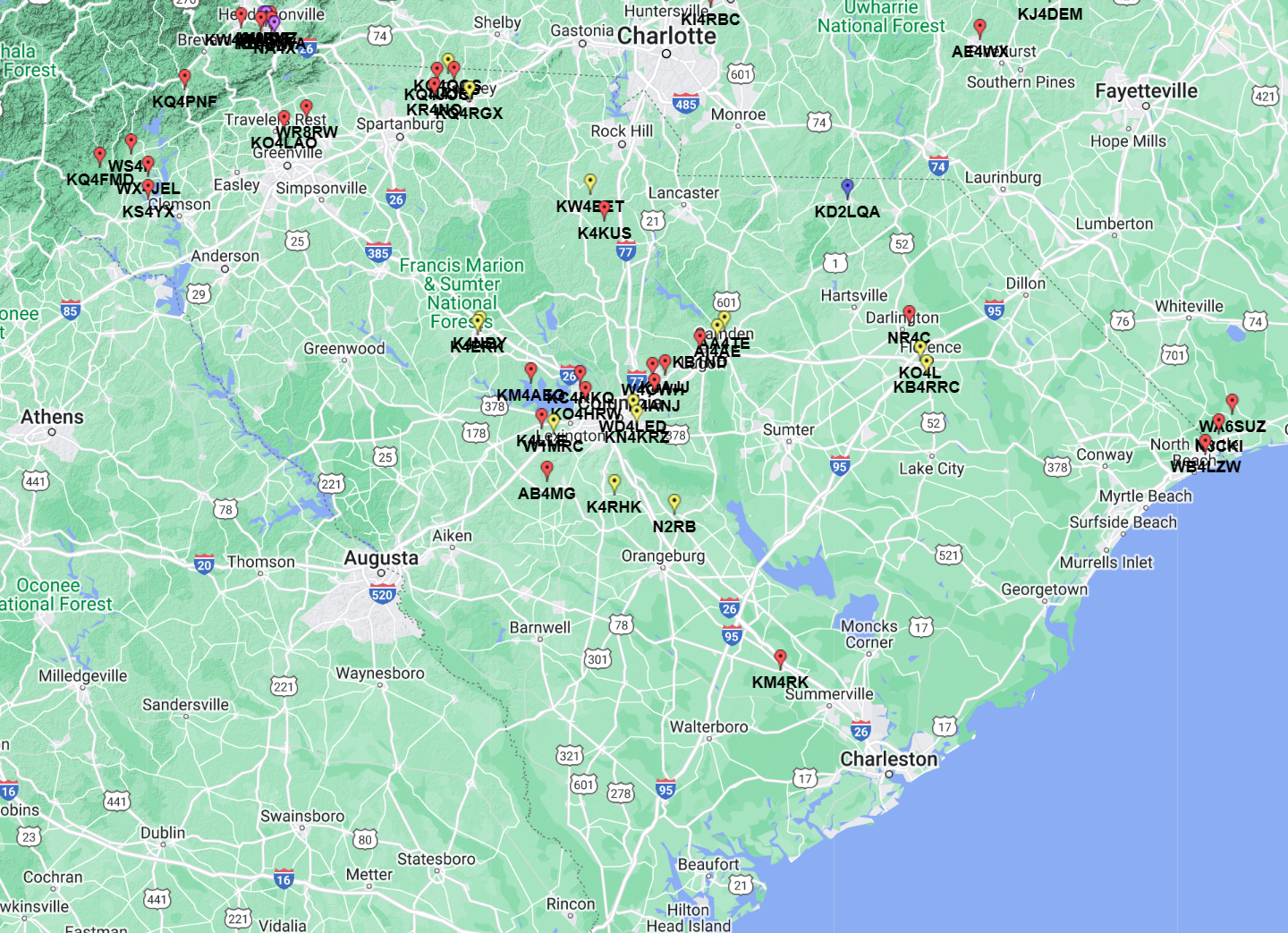
Here’s a screenshot of results from yesterday’s (May 15th). Winlink Wednesday. It’s difficult to see some of the callsigns, so here’s a link in case you want to zoom in to see your specific area:  https://www.qsl.net/kw4shp/WinlinkWed/WWmap.html
THANKS to everyone who checked in and contributed to this impressive increase from last week. If you missed this week, not to worry. You’ll have another opportunity next Wednesday, May 22nd.
Thanks and 73,
Mark
KN4KRZ

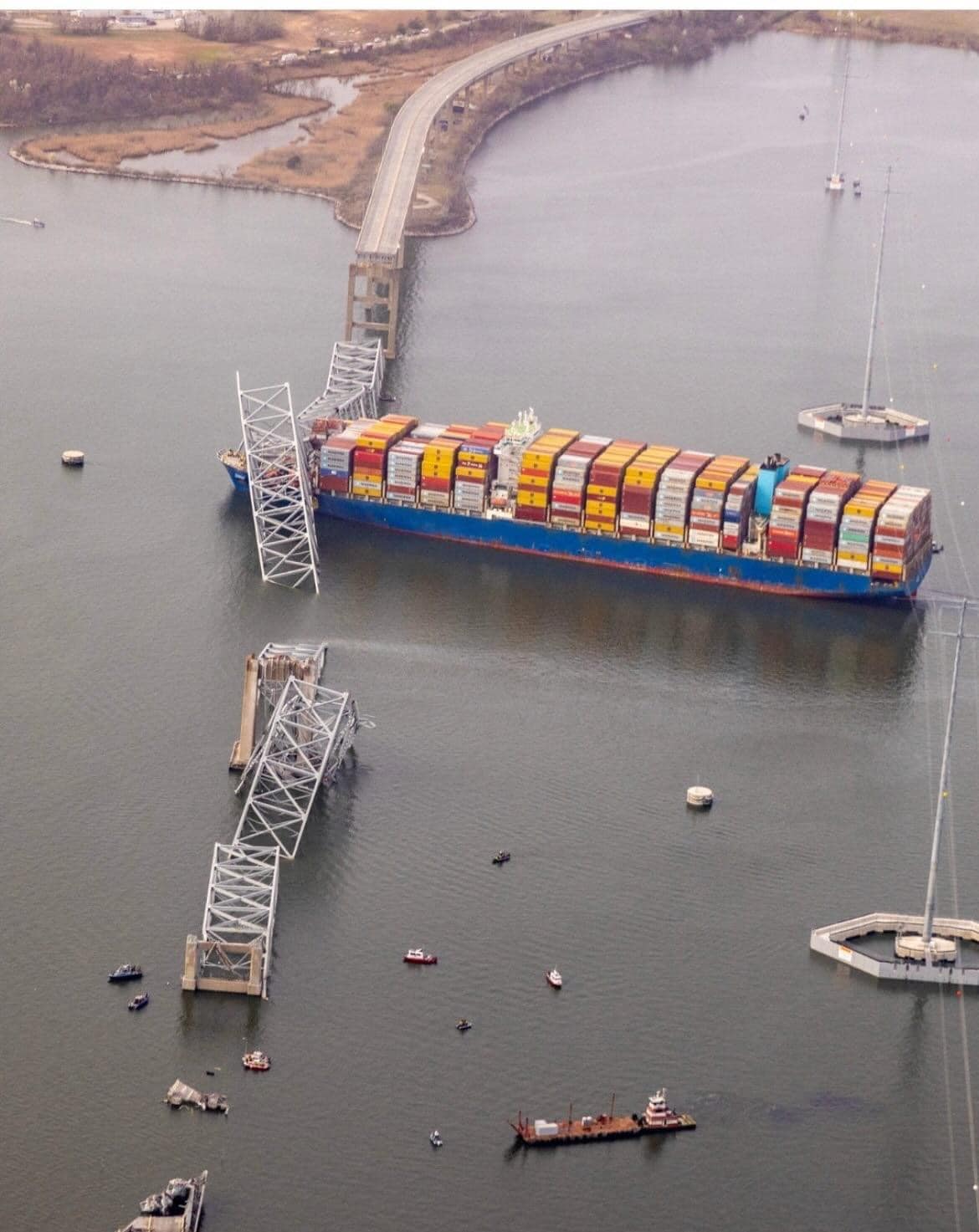
This is the Baltimore City fire department radio traffic of Key bridge collapse


This is the first time I have heard first responder traffic during a significant event. This group always remained calm and professional. It would be awesome if the SC amateur volunteer community (ARES and AUXC ) could train to this level of communications.
This is also the first time I have heard ICS in action. You can follow command being transferred up then out to a unified command . Then break out groups under the unified command off onto their own groups and the groups get assigned talk groups. The only negative was that it appears some of the mutual aid counties/agencies were not setup to talk to Baltimore Fire but they solved that with liaisons.
From my point of view as a radio operator, the communications ( not the ICS aspect, we would not be asked do that) is something I would like to emulate.
Steve Nixon
KC4UAL

Significant Weather Event, SCHEART Linked Repeater Network

When a big weather event is expected the SCEMD might requested the SCHEART VHF repeaters be linked statewide during the event. When that happens the state EOC ( K4EMD ) will be monitoring the SCHEART network for damage reports or other significant information that needs to be relayed to the State Warning Point..
—
So what  “significant information” is the state EOC wanting to hear about?
The County/State EOC is looking for infrastructure damage or situations impeding emergency response.
Here are few examples:
1) Infrastructure issues like a vehicle bridge is underwater or washed out.
2) A tornado or funnel cloud has touched down on the ground.
3) The dam has broken  and the roads downstream are flooding.
4) A train has derailed.
5) The river is so high that the bridge supports might not be safe.
—
All other weather related information should be reported to the Skywarn net. Ask your local Skywarn leadership were that net is located and what training you should have to make an accurate report.
The state EOC operator is not able to pass on your Skywarn spotters report to the NWS. You are expected to join a Skywarn net local to you and deliver that report yourself.
—
IF the county EOC is activated and running a net on their tactical repeater/frequency,  it is expected that you will report all significant information ONLY to the county EOC. The county EOC will handle the report and forward whatever they need to K4EMD.  In many weather related situations the county EOC is not activated and in those situations you would make your report to K4EMD, the state EOC directly.
—
The state EOC, K4EMD usually does not run a NET for weather related events. Usually K4EMD is monitoring and will reply to you if asked. You can call for K4EMD or net control either way and if the state EOC is activated an operator should reply. If not just wait a few minutes and try again.